In many modern workplaces, the line between “casual” and “unprofessional” can become blurred. While a relaxed office culture can boost creativity, it often presents a challenge when strict protocols must be followed. Our latest business English short highlights a common workplace tension: the “informal requester” versus the “process guardian.” Keep reading for tips on how you can better set boundaries and maintain authority at work.
The Importance of Respectful Firmness in Business
Handling internal “clients” or colleagues requires a delicate balance of respect and firmness. When a colleague like Jake tries to use casual language (“Yo,” “Dude,” “Smash this out”) to bypass rules, it is often a test of professional boundaries. Being firm in these moments isn’t about being “difficult”; it is about protecting the integrity of the company’s operations. If Gillian had bypassed the protocol for Jake, she would have been responsible for any security risks or errors in the CEO’s files.
Real-world professionalism means understanding that rules exist for a reason. In high-security environments or executive communication, “shortcuts” often lead to long-term disasters. By remaining calm and relying on “Standard Operating Procedure,” you remove the personal element from the rejection. You aren’t saying “no” to the person; you are saying “yes” to the process. This helps maintain a working relationship without compromising your own job security or the company’s standards.
Furthermore, firmness actually saves time in the long run. If you give in to “just this once” requests, you set a precedent that your time and the company’s rules are flexible. This leads to more interruptions and a higher likelihood of mistakes. By redirecting colleagues to the correct channel immediately, as Gillian does with the digital sign-off form, you train others on how to work with you efficiently and professionally.
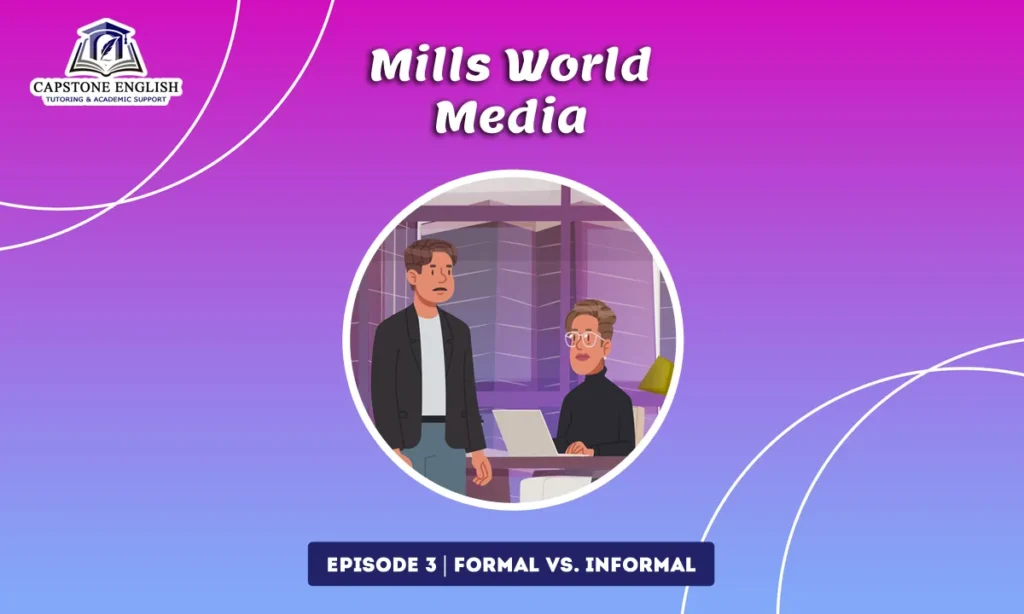
Watch Mills World Media Episode 3: Reel & Script

JAKE: Yo, Gillian! What’s up, chief?
GILLIAN: Jake. I must admit I was expecting an email. Is this matter urgent?
JAKE: Super quick! I need you to just drop this presentation file onto the CEO’s drive. I totally spaced on doing it before the server downtime. It’s a huge deal.
GILLIAN: Right. Jake, our protocol dictates that all executive documents are submitted via the secure internal server, accompanied by a completed digital sign-off form.
VISUAL: Close-up on Jake’s confused face.
JAKE: A sign-off form? Dude, can’t you just, like, smash this out real fast? It’ll only take a sec.
GILLIAN: With all due respect, Jake, I am unable to bypass established procedure, especially where it concerns the CEO. You’ll need to upload the file to the designated HR shared folder and submit the digital request form. That is the standard operating procedure.
JAKE: Ah, bummer. All right, I guess I’ll get to it.
GILLIAN: Indeed.
Vocabulary Spotlight: Key Business Idioms
To help you sound more like a native speaker, let’s break down the professional expressions used in this dialogue.
| Phrase | Meaning | Example |
| Spaced on [something] | To forget to do something. (Informal) | “I totally spaced on the meeting time.” |
| Protocol dictates | The official rules or system state that… | “Safety protocol dictates that we wear hard hats.” |
| With all due respect | A polite way to disagree or say ‘no’ to someone. | “With all due respect, I believe the data shows otherwise.” |
| S.O.P. | Short for Standard Operating Procedure. | “Following the S.O.P. ensures we stay compliant.” |
Episode 3 Takeaways for Maintaining Authority at Work
- Don’t match unprofessional level of casualness: Notice how Gillian remains formal even when Jake uses slang. This maintains her authority.
- Cite the Source: Instead of saying “I won’t do that,” Gillian says “Our protocol dictates…” This makes the process the “boss,” not her.
- The “Due Respect” Pivot: Use phrases like “With all due respect” to signal that a firm boundary is coming.
Compare: Formal vs. Informal
| Phrase | Meaning | Example |
| Spaced on [something] | To forget to do something. (Informal) | “I totally spaced on the meeting time.” |
| Protocol dictates | The official rules or system state that… | “Safety protocol dictates that we wear hard hats.” |
| With all due respect | A polite way to disagree or say ‘no’ to someone. | “With all due respect, I believe the data shows otherwise.” |
| S.O.P. | Short for Standard Operating Procedure. | “Following the S.O.P. ensures we stay compliant.” |
Recap
To wrap things up, mastering the subtle art of professional communication is about more than just vocabulary; it is about projecting confidence and maintaining your integrity in every interaction. Whether you are navigating a casual request from a coworker or a high-pressure demand from a client, the ability to remain firm yet respectful ensures you stay in control of your professional narrative. By consistently applying these techniques, you transform your communication into a strategic asset that drives both your personal success and your organization’s growth.
Join the Conversation
We’ve all dealt with a “Jake” in the office; someone who wants a quick favor that breaks the rules. How do you maintain authority at work when a colleague asks you to “bypass procedure” for them? What are your favorite phrases for staying professional when someone else is being a bit too casual? Tell us about it in the comments below.
Watch more Business English Shorts on our YouTube channel to level up your professional communication.